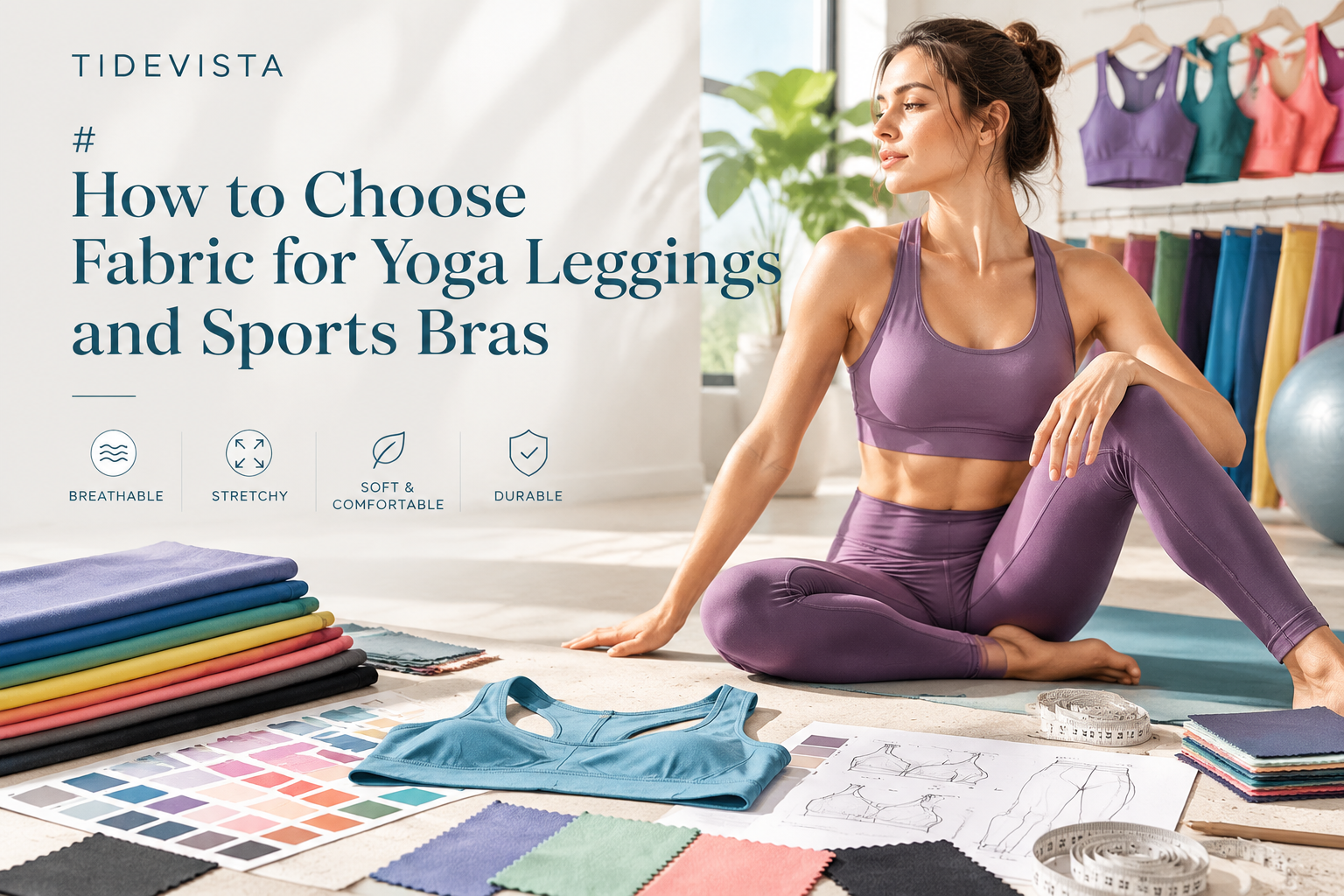
How to Choose Fabric for Yoga Leggings and Sports Bras
Choosing the right fabric is one of the most important decisions when developing yoga leggings and sports bras. Fabric affects comfort, stretch, fit, coverage, moisture management, durability, and the overall quality customers experience when wearing activewear.
For activewear brands, retailers, and wholesale buyers, the best material is not necessarily the most expensive one. It is the fabric that matches the intended activity, product design, target customer, and price point.
In this guide, we explain common yoga wear fabrics, the features buyers should compare, and how to select suitable materials for a custom activewear collection.
1. Why Fabric Selection Matters for Yoga Wear
Yoga wear needs to move with the body while maintaining a comfortable fit. A fabric that feels soft but loses its shape may not be suitable for fitted leggings. A highly compressive material may work for some training styles but feel restrictive during gentle yoga.
When selecting fabric for yoga leggings and sports bras, consider these key properties:
Stretch and recovery: The material should stretch during movement and return toward its original shape.
Opacity: Leggings should provide suitable coverage when stretched.
Softness: The hand feel should match your brand's comfort expectations.
Moisture management: The fabric should suit the intended workout intensity and climate.
Support: Sports bra fabric and construction should work together to provide the intended level of support.
Durability: Resistance to pilling, abrasion, and repeated washing can affect product lifespan.
Appearance: Surface texture, color, finish, and drape influence the overall product style.
These properties depend on fiber composition, yarn, fabric construction, weight, finishing, garment design, and manufacturing quality.
2. Nylon-Spandex vs. Polyester-Spandex
Nylon-spandex and polyester-spandex blends are two common fabric options for activewear. Neither is automatically better for every application.
Nylon-Spandex Fabric
Nylon-spandex blends are frequently used in yoga leggings, sports bras, and fitted workout sets.
Potential advantages include:
A smooth, soft hand feel
Flexible stretch for body-hugging garments
A comfortable feel against the skin
Suitability for many fitted activewear designs
The exact performance varies by fabric construction and finishing. Buyers should also check pilling resistance, opacity, recovery, and color consistency rather than relying on fiber composition alone.
Nylon-spandex can be a suitable option for brands developing soft-feel leggings, matching sets, and fitted sports bras.
Polyester-Spandex Fabric
Polyester-spandex blends are also widely used in activewear.
Depending on the yarn and fabric construction, they can offer:
A range of surface textures and finishes
Useful color-retention characteristics
Stretch suitable for many workout garments
Options for different product price points
Performance varies between fabrics. If moisture management, odor control, or other specialized properties are important, ask for product-specific specifications and relevant test results.
Which Fabric Should You Choose?
Choose based on the actual fabric sample and the requirements of the finished garment.
For example, a premium-feel yoga legging may prioritize softness, stretch recovery, and opacity. A lightweight workout top may place more emphasis on breathability and moisture management.
Request swatches of different materials and compare them under similar conditions before confirming your fabric selection.
3. What Fabric Weight Is Best for Yoga Leggings?
Fabric weight is commonly expressed in grams per square meter (GSM). It helps buyers compare material weights, but it does not determine quality or opacity by itself.
The appropriate weight depends on the fiber, knitting structure, finish, garment construction, and intended use.
Lightweight Fabrics
Lightweight materials may suit breathable tops, camisoles, and certain warm-weather activewear styles.
For leggings, however, a lightweight fabric should be evaluated carefully for coverage, support, and durability.
Medium-Weight Fabrics
Medium-weight fabrics can provide a balance between flexibility, coverage, and everyday comfort.
They may be suitable for yoga leggings, sports bras, and matching activewear sets, depending on the material's construction and intended performance.
Heavier Fabrics
Heavier fabrics may provide a more substantial hand feel and greater coverage, depending on their construction.
They can be considered for selected leggings and supportive activewear designs, but greater weight does not automatically mean better compression or quality.
How to Evaluate Fabric Weight
When comparing fabric options, request the actual GSM and test the material in the intended garment design.
Check how it behaves when stretched, whether it becomes transparent, how quickly it recovers, and whether its thickness suits your target customers.
4. How to Choose Fabric for Non-See-Through Yoga Leggings
Opacity is a major consideration for yoga leggings, particularly for garments intended for squats, stretching, and other movements that place tension on the fabric.
A fabric that looks opaque when laid flat may become more transparent when stretched.
To assess coverage, consider the following factors.
Fabric Construction and Density
The yarn, knitting structure, and fabric density all influence opacity. Fiber content alone cannot guarantee that leggings will be non-see-through.
Stretch and Recovery
Excessive stretching can reduce coverage. A fabric with suitable stretch and recovery, combined with an appropriate garment fit, helps maintain consistent coverage during movement.
Color and Finish
Light colors and certain finishes may show more through the fabric than darker shades. Evaluate each color separately instead of assuming that every color performs identically.
Garment Fit
A garment that is too small may place excessive tension on the fabric and affect opacity.
Confirm the size chart and test the finished sample across the intended size range.
Practical Testing
Before bulk production, test samples under consistent lighting and movement conditions. Check the fabric when standing, bending, squatting, and stretching.
For commercial products, agree on the coverage expectations and inspection requirements with your manufacturer before production begins.
5. What Makes a Good Sports Bra Fabric?
Sports bra performance depends on both fabric properties and garment construction.
The material must work with the pattern, lining, elastic, straps, and other components to provide the intended comfort and support.
Stretch and Recovery
A sports bra should accommodate movement while retaining its intended fit. Evaluate how well the material returns toward its original shape after repeated stretching.
Support and Compression
Some designs are intended for low-impact activities, while others target more demanding workouts.
Fabric alone does not determine support. Strap width, band construction, coverage, lining, cup design, and garment fit also influence the result.
Define the intended activity and support level before selecting materials.
Breathability and Moisture Management
Comfort during exercise can depend on how the fabric handles heat and perspiration.
If your product requires specific moisture-management performance, ask for relevant fabric information or test results rather than relying only on marketing terms.
Softness and Skin Comfort
The inner surface, seams, elastic, and label placement can affect comfort as much as the main fabric.
Review the complete garment sample, especially in areas that come into close contact with the skin.
6. How to Compare Activewear Fabric Quality
When sourcing yoga wear, request specific information instead of comparing suppliers using general descriptions such as premium, high quality, or four-way stretch.
Useful comparison points include:
Fiber composition and percentage
Fabric weight in GSM
Fabric width and construction
Stretch and recovery performance
Opacity under stretch
Pilling and abrasion resistance
Colorfastness to washing and perspiration
Dimensional stability after washing
Moisture-management properties, where required
Availability of test reports and material specifications
Not every project requires every test. Select the appropriate checks according to your product positioning, target market, and quality requirements.
For larger orders, document the approved fabric reference and confirm how production materials will be checked against it.
7. How to Choose Fabric for Different Yoga Wear Products
Different garment categories have different requirements.
Yoga Leggings and Flare Pants
Prioritize stretch recovery, opacity, comfort, and a stable fit. For flare leggings, also consider how the fabric drapes and moves through the lower leg.
Sports Bras
Evaluate stretch, recovery, lining, support, and comfort around the band and straps. The correct fabric depends on the intended activity and garment construction.
Yoga Camisoles and Workout Tops
Lightweight fabrics may be suitable for breathable tops, while fitted styles may need stronger recovery and more stable construction.
Consider the neckline, straps, body coverage, and whether the garment is intended to be worn alone or as a layering piece.
Activewear Bodysuits
Bodysuits require consistent stretch and recovery across the body, along with careful attention to fit, seams, and comfort.
Test the garment through its intended range of movement and confirm that the fabric works with the pattern.
Yoga Shorts and Sports Skirts
Shorts and skirts may use fabrics similar to leggings, depending on their intended function. Check coverage, comfort, movement, and the interaction between outer layers and built-in shorts where applicable.
8. Sustainable Fabric Options for Activewear
Some brands are interested in materials that support specific environmental goals.
Depending on availability, options may include recycled polyester or recycled nylon. However, recycled content alone does not establish the overall environmental impact of a garment.
When evaluating a material, ask about:
The percentage of recycled content
Available material certifications or supporting documentation
Fabric performance and durability
Color and finishing options
Minimum order requirements
Availability for repeat orders
Use environmental claims that can be substantiated with reliable documentation. If your brand needs specific certifications or chain-of-custody information, confirm the requirements before ordering.
9. How to Work with a Yoga Wear Manufacturer on Fabric Selection
A clear sourcing process helps ensure that the selected fabric meets your product requirements.
Step 1: Define the Product Requirements
Identify the garment category, target customer, intended activity, price positioning, preferred hand feel, colors, and expected performance.
Step 2: Request Fabric Swatches
Ask for samples of available fabrics with their composition, weight, and relevant specifications.
Comparing physical swatches is more reliable than selecting materials from photographs alone.
Step 3: Evaluate Performance
Check softness, stretch, recovery, opacity, and other important properties. Request relevant test information if your project requires specific performance standards.
Step 4: Develop a Garment Sample
Evaluate the fabric in the actual product. A fabric that performs well as a swatch may behave differently when used in a particular garment design.
Step 5: Confirm the Production Reference
Once the fabric and sample are approved, record the material specifications and color reference. Clarify how substitutions or changes will be handled.
Step 6: Confirm MOQ and Lead Time
Fabric availability, custom colors, and special finishes may affect order quantities and schedules. Confirm these details before committing to bulk production.
10. Why Discuss Activewear Fabrics with TIDEVISTA?
TIDEVISTA focuses on swimwear and activewear for businesses developing their own collections.
For buyers planning yoga leggings, sports bras, matching sets, bodysuits, and other activewear products, fabric selection should be considered alongside design, sizing, garment construction, branding, and target retail positioning.
Prepare your preferred product styles, material requirements, color choices, estimated quantities, and any required performance specifications before requesting a quotation.
Contact TIDEVISTA to discuss your activewear collection and explore suitable product development and customization options.
11. Frequently Asked Questions
What is the best fabric for yoga leggings?
There is no single best fabric for every yoga legging. Nylon-spandex and polyester-spandex blends are common options. The right choice depends on softness, stretch recovery, opacity, weight, durability, and the intended use.
Is nylon or polyester better for sports bras?
Both can be suitable. Compare the actual fabric's stretch, recovery, moisture management, softness, durability, and compatibility with the intended design.
What GSM is best for yoga leggings?
The appropriate GSM depends on the fabric construction, desired coverage, compression, climate, and garment design. Ask for the fabric weight and evaluate an actual sample before making a decision.
How can I make sure yoga leggings are not see-through?
Evaluate opacity when the material is stretched, test the finished garment during movement, and confirm that the size and fit do not place excessive tension on the fabric.
What does four-way stretch mean?
Four-way stretch generally describes material that stretches in both the lengthwise and crosswise directions. The amount of stretch and recovery can vary, so request specifications and evaluate the fabric sample.
Are recycled fabrics suitable for yoga wear?
Some recycled polyester and recycled nylon fabrics can be suitable for activewear. Check the specific material's performance, durability, available colors, documentation, and suitability for your product design.
Should I test fabric before bulk production?
Yes. Request swatches, evaluate the material, and review a finished garment sample before bulk production. Agree on the approved fabric specifications and quality requirements with your manufacturer.
Final Thoughts
Choosing fabric for yoga leggings and sports bras requires more than comparing fiber composition or price. Consider stretch, recovery, opacity, comfort, durability, and the needs of your target customers.
Request fabric swatches, test the material in the finished garment, and confirm the approved specifications before bulk production.
With a structured selection process, your brand can make better sourcing decisions and develop activewear products that meet its intended quality and performance requirements.
Planning your own activewear collection? Contact TIDEVISTA to discuss yoga wear fabrics, custom designs, and private label development.