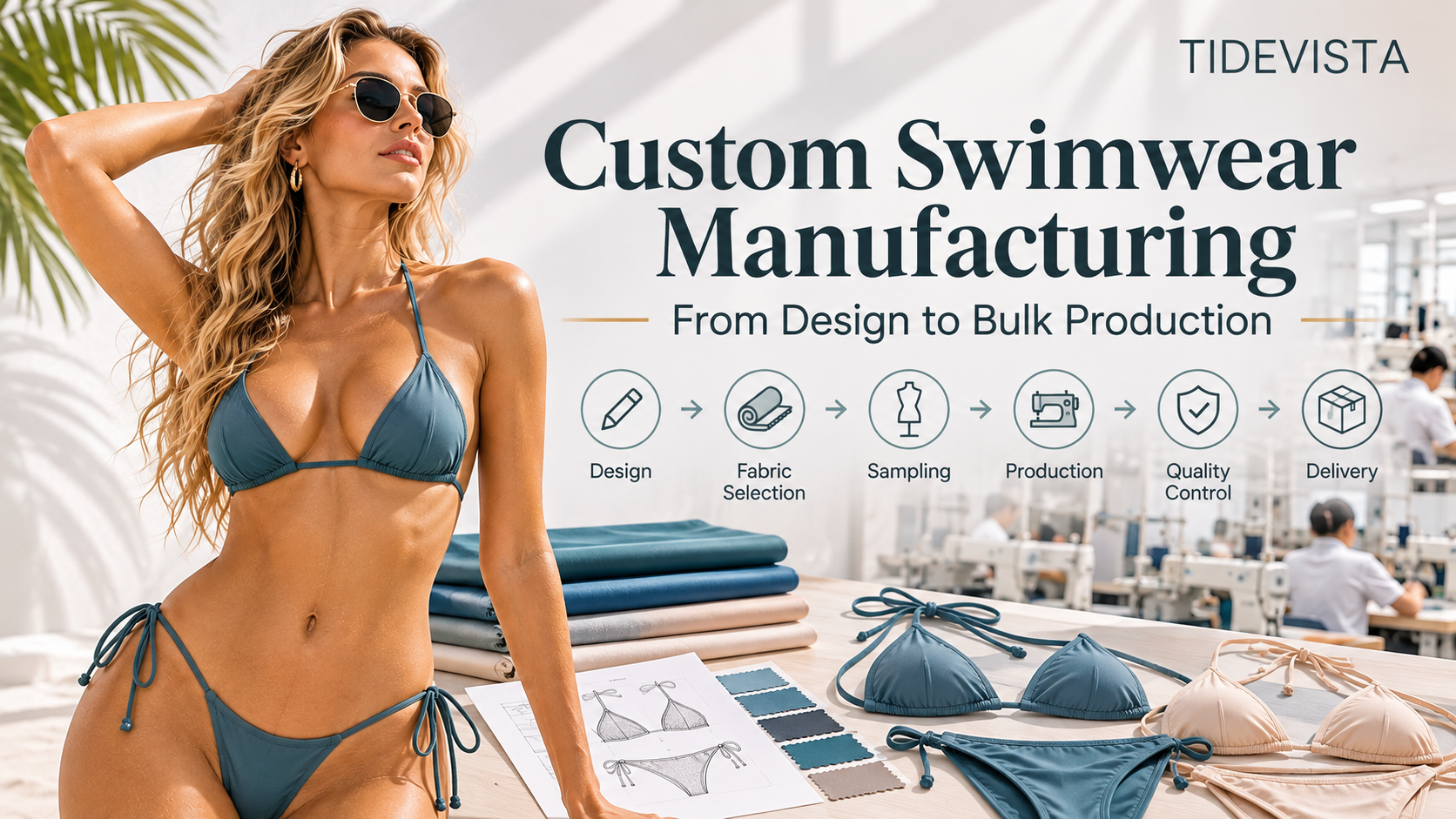
Custom Swimwear Manufacturing: From Design to Bulk Production
Custom swimwear manufacturing involves much more than turning a design into a finished swimsuit. It requires careful planning, suitable fabric selection, accurate sizing, sample development, quality checks, and coordination throughout production.
For swimwear brands, fashion retailers, importers, and online businesses, understanding the manufacturing process can make it easier to communicate product requirements, manage costs, and prepare for a successful launch.
Whether you are developing a new bikini collection, creating a private label one-piece swimsuit, or expanding an existing beachwear range, this guide explains the key stages of custom swimwear production, from the first design concept to bulk shipment.
1. What Is Custom Swimwear Manufacturing?
Custom swimwear manufacturing is the process of developing swimwear according to a buyer's product specifications, design preferences, or brand requirements.
Depending on the manufacturer's capabilities, a project may involve selecting an existing style, modifying a design, developing a new pattern, sourcing fabric, producing samples, adding private label branding, and arranging bulk production.
Common custom swimwear products include:
Triangle bikinis and halter bikini sets
High-waisted and low-rise bikini bottoms
One-piece swimsuits
Bandeau and strapless swimwear
Tankinis and other two-piece designs
Plus-size swimwear
Printed, textured, and solid-color swimwear
Customization may cover the silhouette, fabric, color, lining, straps, closures, labels, packaging, and other construction details.
The available options depend on the supplier, product complexity, material availability, and order requirements. Before starting development, clarify which features can be customized and how they affect cost and lead time.
2. Step One: Develop Your Swimwear Design
A clear product concept is the starting point for a successful manufacturing project.
Before contacting a supplier, identify your target customers, intended price range, preferred styles, and the overall direction of your collection.
Prepare Design References
You can communicate your concept through product photographs, sketches, mood boards, technical drawings, or a technical pack.
Useful design information includes:
Front and back views of the garment
Neckline, straps, and closure details
Bikini top and bottom coverage
Intended fit and garment measurements
Fabric preferences and color references
Lining, padding, and hardware requirements
Logo placement and branding details
If you do not have a complete technical pack, start with reference images and a written description. The manufacturer can clarify which additional specifications are needed.
Choose the Right Swimwear Style
Different silhouettes create different looks and fit requirements.
Triangle bikinis may suit a minimalist collection, while high-waisted bikini sets can offer a different coverage option. One-piece swimsuits provide opportunities for variations in necklines, back designs, cutouts, and shaping details.
Choose styles according to your target market rather than trying to include every possible design in your first collection.
3. Step Two: Select Suitable Swimwear Fabrics
Fabric selection affects the garment's comfort, stretch, fit, appearance, and performance.
Nylon-Spandex Fabric
Nylon-spandex blends are commonly used in swimwear because they can provide a smooth hand feel, flexibility, and a close fit.
Their actual performance depends on the fiber ratio, yarn, fabric construction, finishing, and garment design.
Polyester-Spandex Fabric
Polyester-spandex blends are another option for swimwear. Depending on the construction and finishing, they can offer useful color-retention and durability characteristics.
Ask the supplier about the specific fabric's suitability for swimming, sun exposure, and the intended product requirements rather than relying on fiber composition alone.
What Should Buyers Check?
When evaluating fabric options, consider:
Composition: Confirm the fiber content and supplier specifications.
Stretch and recovery: Check how the fabric behaves during movement.
Opacity: Assess coverage when the material is stretched.
Hand feel: Make sure the material suits your product positioning.
Color consistency: Compare the approved color with the production material.
Chlorine and saltwater performance: Request relevant test information if these properties are important.
Pilling and abrasion resistance: Consider appropriate testing for your intended use.
Request physical fabric swatches whenever possible. A material that looks attractive in a photograph may feel or perform differently in person.
4. Step Three: Confirm Measurements, Fit, and Construction
Swimwear fit is one of the most important parts of product development. Even a visually appealing design can create customer dissatisfaction if the garment fits poorly.
Establish a Size Specification
Define the intended size range and the measurement points used for each garment.
Depending on the product, specifications may include bust, underbust, waist, hip, front rise, garment length, strap length, and other relevant measurements.
If your brand targets the US or European market, determine the size system you intend to use. Do not assume that size labels correspond identically across all manufacturers or markets.
Review Construction Details
Confirm important design features before sample development, including:
Lining and padding
Elastic placement and tension
Strap width and adjustability
Back closures and hardware
Seam construction and stitching
Edge finishing
Logo placement
Coverage and support requirements
Written specifications help the supplier understand your expectations and reduce the risk of inconsistent interpretations.
5. Step Four: Develop and Approve Samples
Sampling allows you to evaluate the product before committing to bulk production.
The number of samples and revisions depends on design complexity, the quality of the initial specifications, and the agreement between buyer and supplier.
What Should You Check in a Sample?
Evaluate the sample under consistent conditions and compare it with your design requirements.
Check:
Fit and comfort
Measurement accuracy
Fabric feel and stretch recovery
Opacity and lining
Stitching and seam appearance
Strap and closure performance
Color and print placement
Overall finishing and appearance
For printed designs, review the scale, placement, and color appearance. For styles with removable cups or adjustable straps, confirm that these features function as intended.
Record Sample Revisions
If the sample requires changes, provide specific feedback. For example, identify which measurement needs adjustment or which design detail does not match the reference.
After the final sample is approved, keep a record of the agreed specifications, materials, measurements, and construction details.
The approved sample or written production specification should serve as a reference for bulk manufacturing.
6. Step Five: Confirm the Quotation and Production Requirements
Before placing a bulk order, make sure the commercial and technical details are clear.
A quotation should identify the relevant product specifications, order quantities, unit prices, customization charges, packaging requirements, and applicable terms.
Confirm the following details:
Quantity per style, color, and size
Minimum order quantity (MOQ)
Fabric and accessory specifications
Sample and development costs
Brand labels and hangtags
Custom packaging
Payment terms
Estimated production lead time
Inspection requirements
Shipping arrangements and delivery terms
If you are developing several swimwear styles, ask the supplier to clarify whether minimum quantities apply separately to each style, color, or material.
For more information about order quantities, read our guide to What Is the MOQ for Custom Swimwear? and link that phrase to your related article.
7. Step Six: Arrange Materials and Start Bulk Production
Once the order and production specifications are confirmed, the supplier can plan material purchasing and manufacturing according to the agreed arrangements.
Depending on the product and production setup, the process may include:
Preparing the required fabrics, linings, elastics, and accessories.
Checking materials against the agreed specifications.
Preparing patterns and cutting layouts.
Cutting fabric panels.
Sewing and assembling the garments.
Adding labels, closures, and other components.
Completing finishing operations.
Conducting inspections and preparing finished products.
The exact workflow varies by factory and product type.
During production, maintain communication about material availability, progress, and any issues that could affect the agreed schedule. If a change is necessary, document the revised requirements and obtain approval before proceeding.
8. Step Seven: Implement Quality Control
Quality control helps ensure that finished swimwear matches the approved product requirements.
The inspection plan should be agreed upon before production rather than left until the order is ready to ship.
Fabric and Material Inspection
Where applicable, check fabric color, visible defects, material specifications, and consistency with approved samples.
In-Process Inspection
During production, relevant checks may include cutting accuracy, stitching, seam construction, elastic application, and the placement of garment components.
Identifying issues early can reduce the need for extensive rework later.
Finished Product Inspection
Finished swimwear can be checked for:
Measurements and size consistency
Stitching and seam quality
Fabric defects and stains
Color and print consistency
Label and logo placement
Functional components
Packaging accuracy
If your brand has specific quality standards or testing requirements, communicate them before production begins.
For products intended for particular markets, confirm applicable labeling, chemical, and product-safety requirements with qualified testing or compliance professionals when necessary.
9. Step Eight: Arrange Branding, Packaging, and Shipment
Brand presentation is an important consideration for private label swimwear.
Depending on the supplier's capabilities, customization may include woven labels, printed labels, hangtags, logo applications, size stickers, and branded packaging.
Before production, approve all artwork and confirm the placement, dimensions, materials, and quantities of the branding components.
For shipment, clarify the carton specifications, shipping marks, packing list, commercial invoice, and other required export documents.
Delivery time depends on production readiness, order quantity, destination, shipping method, and other logistics factors. Request an estimated schedule and confirm the agreed delivery terms before placing the order.
10. How Long Does Custom Swimwear Manufacturing Take?
There is no single lead time for every custom swimwear order.
The overall schedule may include design clarification, fabric sourcing, sample development, revisions, material purchasing, bulk production, inspection, and shipping.
The timeline can be affected by:
Whether the design already exists
Availability of the selected fabric and colors
Number of sample revisions
Product complexity
Order quantity
Custom printing and branding
Seasonal production demand
Shipping method and destination
When planning a product launch, ask for separate estimates for sample development, bulk production, and transportation.
Allow time for sample revisions and approval instead of scheduling the entire project around an assumed production date.
11. How to Choose a Custom Swimwear Manufacturer
The right supplier should be able to understand your product requirements and explain the steps needed to turn them into finished garments.
When evaluating manufacturers, consider the following:
Product development: Can the supplier support your required styles, specifications, and revisions?
Fabric knowledge: Can it explain material options and provide relevant specifications?
Sample quality: Can the supplier produce samples that reflect your design requirements?
Quality management: Are inspection procedures and acceptance standards clearly defined?
Customization: Can it accommodate your branding, labels, and packaging needs?
Communication: Are quotations, timelines, and production updates clear?
Order flexibility: Can the supplier explain MOQ requirements for different styles and colors?
Shipping coordination: Can it clarify packing requirements, export documents, and delivery arrangements?
Review samples and document the agreement before committing to a large order. A clear production brief and consistent communication are essential for a smoother manufacturing process.
12. Custom Swimwear Manufacturing with TIDEVISTA
TIDEVISTA focuses on swimwear and activewear for businesses developing their own product collections.
For buyers planning custom bikinis, one-piece swimsuits, or private label swimwear, the development process starts with a clear understanding of the product concept, target market, fabric preferences, sizing, and branding requirements.
Before requesting a quotation, prepare reference images or technical specifications, estimated quantities, preferred colors, and your target delivery schedule.
These details help establish the scope of the project and identify which customization options need to be discussed.
Contact TIDEVISTA to discuss your swimwear collection and request information about product development, customization, and order requirements.
13. Frequently Asked Questions
What is the first step in custom swimwear manufacturing?
The first step is to define the product requirements. Prepare design references, target sizes, fabric preferences, colors, estimated quantities, and branding details before discussing the project with a supplier.
Can I manufacture swimwear from my own design?
Many manufacturers offer some level of custom development, but available services vary. Ask whether the supplier can work from your sketches, reference images, technical pack, or existing sample.
Do I need a technical pack to produce custom swimwear?
A technical pack is useful because it documents measurements, materials, construction details, and other product specifications. If you do not have one, ask the manufacturer which information is required to develop the sample accurately.
How many samples should I order?
The number depends on design complexity and how much revision is required. Confirm the sampling process and costs with the supplier. Additional samples may be necessary if the fit, fabric, or construction changes significantly.
How can I maintain consistent quality in bulk production?
Approve a clear production reference, document garment specifications, agree on inspection standards, and arrange suitable material, in-process, and finished-product checks.
Can I add my brand logo and custom packaging?
Private label options may include garment labels, hangtags, logo applications, and packaging. Confirm the available methods, artwork requirements, costs, and minimum quantities before production.
What information should I include in a manufacturing inquiry?
Include the product style, reference design, fabric preferences, size range, color options, estimated order quantity, branding requirements, packaging details, and target delivery date.
Final Thoughts
Custom swimwear manufacturing is a step-by-step process that connects product design with material selection, sample approval, bulk production, quality control, and shipment.
Clear specifications, realistic schedules, and agreed quality requirements help buyers manage the process more effectively.
Whether you are developing your first bikini collection or expanding an established swimwear brand, careful preparation can make supplier communication and production planning more efficient.
Ready to develop your swimwear collection? Contact TIDEVISTA to discuss your design ideas, customization needs, and sourcing requirements.