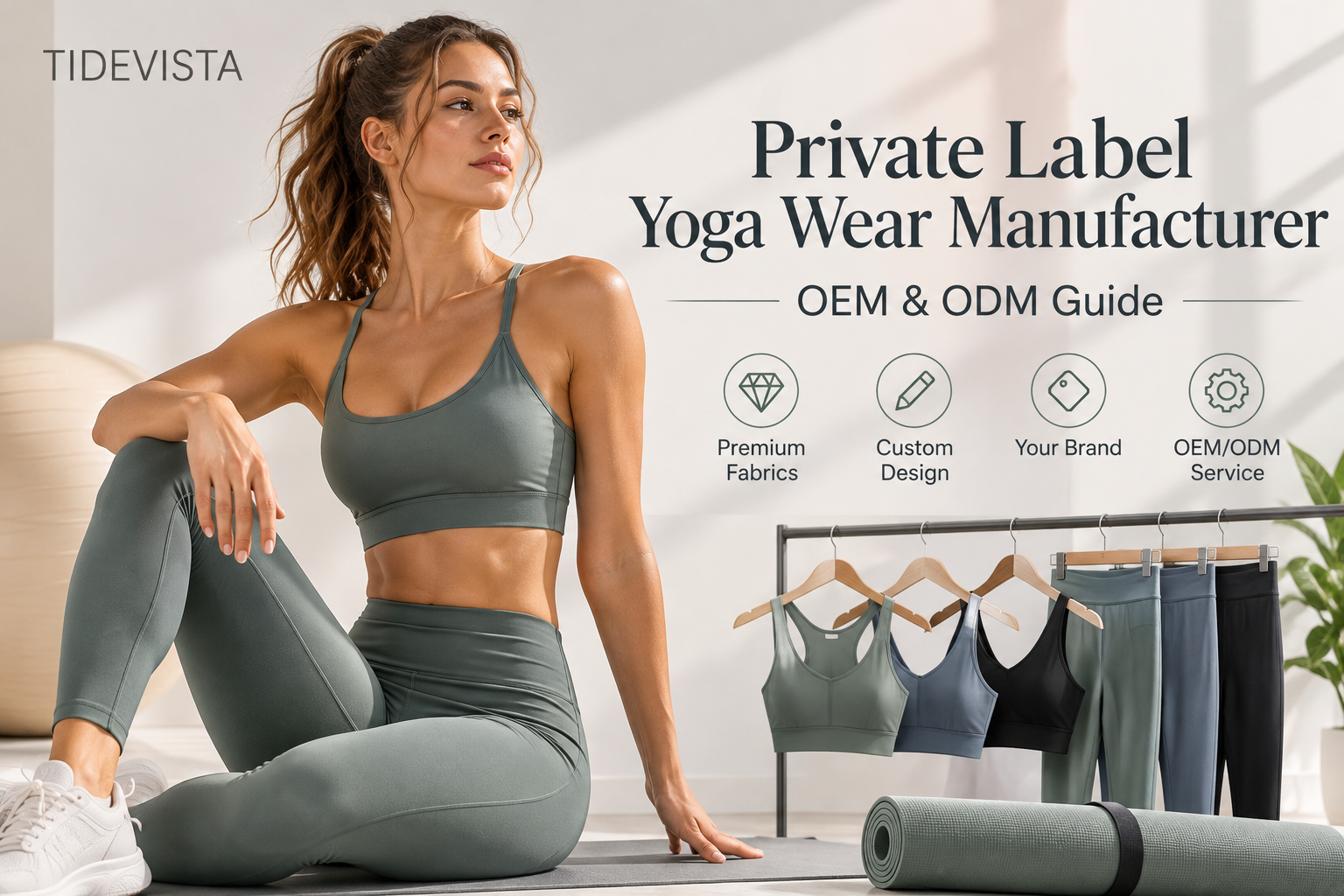
Private Label Yoga Wear Manufacturer: OEM & ODM Guide
Building a successful yoga wear brand takes more than attractive designs. You also need comfortable fabrics, reliable sizing, consistent quality, and a manufacturing partner who understands your product requirements.
Working with a private label yoga wear manufacturer allows you to develop products under your own brand name, from yoga leggings and sports bras to matching workout sets, tops, shorts, and bodysuits.
Whether you are launching a new activewear brand or expanding an existing collection, this guide explains how private label yoga wear manufacturing works, what customization options are available, and how to choose the right supplier for your business.
1. What Is Private Label Yoga Wear?
Private label yoga wear refers to activewear products sold under a retailer's or brand owner's own name. The manufacturer helps produce the garments, while the buyer develops the brand identity and determines the product requirements.
Depending on the manufacturer's capabilities, private label services may include selecting existing designs, customizing colors and fabrics, adding brand labels, developing packaging, and arranging bulk production.
Common private label yoga wear products include:
Yoga leggings and flare leggings
High-waisted yoga pants and workout shorts
Sports bras and yoga camisoles
Short-sleeve and long-sleeve workout tops
Matching yoga sets
Activewear bodysuits and sports skirts
Lightweight training jackets
Private label manufacturing can help businesses create a consistent product collection without managing every stage of garment production themselves.
2. Private Label vs. OEM vs. ODM Yoga Wear
Understanding these manufacturing models helps you choose the right approach for your brand.
Private Label Yoga Wear
Private label focuses on selling products under your own brand. You may select existing styles and customize labels, colors, packaging, or other available features.
This approach can be suitable for retailers and online businesses that want to establish their own identity in the activewear market.
OEM Yoga Wear Manufacturing
OEM manufacturing generally follows the buyer's designs, technical specifications, or product requirements.
You may provide reference images, technical packs, measurements, fabric specifications, and branding instructions for the manufacturer to follow.
OEM is useful when your brand has a clear product concept and needs a supplier to help turn it into a finished garment.
ODM Yoga Wear Manufacturing
ODM manufacturing generally involves selecting or adapting designs developed by the manufacturer.
This can be a practical option for businesses that want to build a collection using existing design resources and customize selected details.
The exact services available vary by supplier. Before placing an order, confirm which design, development, and branding services are included.
3. What Yoga Wear Products Can You Customize?
A flexible manufacturing partner can help you develop a coordinated activewear collection that suits your target customers.
Yoga Leggings and Workout Pants
Yoga leggings are a core product for many activewear brands. Customization may include high-waisted designs, flare legs, different inseam lengths, pocket placement, waistband construction, and fabric compression.
When evaluating samples, check stretch recovery, opacity, seam construction, waistband stability, and comfort during movement.
Sports Bras and Yoga Tops
Sports bras and yoga tops are available in a variety of silhouettes, including racerback, cross-back, halter, camisole, and longline designs.
Depending on the style, customization may include removable cups, lining, strap construction, neckline shape, support level, and fabric texture.
The appropriate construction depends on the intended activity and the support requirements of your target customers.
Matching Yoga Sets
Matching sets can help your brand create coordinated collections and simplify product styling.
Common combinations include sports bras with leggings, camisoles with flare pants, and short-sleeve tops with fitted workout bottoms.
You can discuss matching colors, consistent fabric finishes, coordinated size ranges, and compatible product packaging with your supplier.
Bodysuits, Shorts, and Activewear Jackets
Bodysuits, workout shorts, skirts, and lightweight jackets can expand your assortment beyond basic leggings and sports bras.
For each product category, define the intended use, fit, construction details, and seasonal requirements before requesting a quotation.
4. How to Choose the Right Fabric for Yoga Wear
Fabric selection influences comfort, stretch, fit, appearance, and garment performance.
Nylon-Spandex Blends
Nylon-spandex blends are commonly used in yoga leggings, sports bras, and fitted activewear. They can offer a smooth hand feel, flexibility, and a close fit when properly constructed.
The exact performance depends on the yarn, fabric structure, weight, finishing, and spandex content.
Polyester-Spandex Blends
Polyester-spandex blends are also widely used in activewear. Depending on the fabric construction and finishing, they can provide useful moisture-management characteristics, color options, and durability.
Ask your manufacturer for fabric specifications and samples rather than choosing solely by fiber composition.
Important Fabric Features
When comparing materials, consider:
Stretch and recovery: The garment should move comfortably and return toward its original shape.
Opacity: Leggings should provide appropriate coverage when stretched.
Moisture management: Choose fabrics suited to the intended exercise and climate.
Softness and hand feel: Comfort can influence the overall customer experience.
Color consistency: Check that the approved color matches the final production fabric.
Pilling and abrasion resistance: Request suitable testing when these properties are important to your product positioning.
If your brand targets premium activewear customers, request samples of different fabric weights and finishes before finalizing the collection.
5. What Customization Options Are Available?
Private label yoga wear can be customized in several ways, depending on the supplier's capabilities and order requirements.
Colors and Product Design
You may select from available colors or discuss custom color development. Design changes can include waistbands, necklines, straps, seam placement, garment length, pockets, and other construction details.
For custom colors, confirm fabric availability, minimum quantities, color approval requirements, and production lead times.
Brand Labels and Hangtags
Branding options may include woven labels, printed labels, heat-transfer logos, hangtags, and other garment identification details.
Before production, provide your approved logo artwork, dimensions, placement instructions, and any applicable labeling requirements for your target market.
Custom Packaging
Packaging can help reinforce your brand identity and create a consistent presentation across your product range.
Possible options include branded polybags, product cards, size stickers, and other packaging materials, depending on the supplier's available services.
Confirm packaging specifications, artwork, material choices, additional costs, and minimum order requirements before approving the final design.
6. What Is the MOQ for Private Label Yoga Wear?
MOQ stands for minimum order quantity. It is the smallest quantity a supplier accepts for a particular product or order arrangement.
There is no universal MOQ for all yoga wear manufacturers. Requirements may vary depending on the product style, fabric, color, size assortment, branding method, and level of customization.
An existing design with standard materials may have different requirements from a completely new garment developed from scratch.
When requesting a quotation, ask:
What is the MOQ per style and color?
Can different sizes be mixed within one order?
Is there a separate minimum for custom colors or fabrics?
Are custom labels and packaging subject to additional minimums?
Are sample costs charged separately?
Can repeat orders use the previously approved specifications?
If you are launching a new brand, explain your initial order plan and expected future demand. Your supplier can then clarify which available options best fit your requirements.
7. How Does the Yoga Wear Manufacturing Process Work?
A clear development process helps reduce errors and keeps product requirements organized.
Step 1: Define Your Collection
Identify the products you want to develop, your target customers, preferred styles, size range, fabric requirements, colors, and branding needs.
Reference images, sketches, or a technical pack can help communicate your expectations.
Step 2: Confirm the Quotation
Review the proposed specifications, unit prices, MOQ, sample charges, customization costs, packaging requirements, and estimated lead times.
Confirm what is included in the quotation and document any additional requirements.
Step 3: Develop and Review Samples
Evaluate sample garments for fit, comfort, measurements, stitching, fabric feel, opacity, stretch recovery, and appearance.
Record any required changes and obtain approval of the final sample or production specifications before bulk manufacturing begins.
Step 4: Confirm Materials and Production
After order confirmation, the manufacturer arranges the required materials and production schedule.
Maintain clear communication about material availability, production milestones, and any changes that could affect the agreed delivery date.
Step 5: Conduct Quality Inspection
Finished garments should be checked against the approved specifications and agreed quality standards.
Depending on your requirements, inspections may cover measurements, stitching, fabric defects, color consistency, logo placement, labeling, and packaging.
Step 6: Prepare Packaging and Shipment
Confirm size labels, care labels, brand labels, individual packaging, carton details, shipping marks, export documents, and delivery arrangements before dispatch.
8. How to Find a Reliable Yoga Wear Manufacturer
When comparing potential suppliers, consider more than price alone.
Product development capabilities: Can the supplier support your required garment styles and customization details?
Fabric knowledge: Can the supplier explain available materials, fabric performance, and construction options?
Sample quality: Are samples consistent with the agreed specifications, and can revisions be communicated clearly?
Quality control: Are inspection requirements and acceptable quality standards agreed upon before production?
Communication: Does the supplier provide clear quotations, realistic schedules, and timely updates?
Branding support: Can the supplier accommodate your labeling, logo, and packaging requirements?
Production planning: Can the supplier explain order requirements, production scheduling, and shipping arrangements?
Before committing to a large order, review samples, document the specifications, and confirm all important commercial terms in writing.
9. Why Consider TIDEVISTA for Your Yoga Wear Collection?
TIDEVISTA focuses on swimwear and activewear for businesses developing their own product collections.
For buyers exploring private label yoga wear, the product development discussion can begin with your preferred garment styles, target market, fabric requirements, color palette, size range, and branding concept.
Whether you are planning yoga leggings, sports bras, matching sets, bodysuits, or other activewear products, clearly defined specifications help establish a more efficient sourcing process.
Contact TIDEVISTA to discuss your product ideas, customization requirements, and potential manufacturing arrangements.
10. Frequently Asked Questions
Can I add my own logo to yoga wear?
Private label options may include woven labels, printed labels, heat-transfer logos, hangtags, and branded packaging. Confirm the available methods and any additional minimum order requirements with your supplier.
Can I customize yoga wear colors and fabrics?
Customization may be available depending on fabric availability, product design, order quantity, and production requirements. Request fabric samples and confirm color approval before bulk production.
Can I order matching yoga sets?
Matching sets can combine items such as sports bras, camisoles, leggings, and flare pants. Confirm whether the selected products can be developed using compatible fabrics, colors, and size specifications.
How long does private label yoga wear production take?
The schedule depends on sampling, design complexity, material availability, customization requirements, order quantity, and factory capacity. Ask for separate estimates for sampling and bulk production before confirming your launch schedule.
What should I prepare before contacting a yoga wear manufacturer?
Prepare your preferred product styles, reference images, estimated order quantities, size range, fabric preferences, color choices, branding requirements, packaging details, and target delivery date.
Is private label yoga wear suitable for a new brand?
It can be suitable for new brands that want to establish their own identity while working with an external manufacturing partner. Start by clarifying your target customer, product assortment, budget, order requirements, and customization priorities.
Final Thoughts
Choosing the right private label yoga wear manufacturer involves balancing product quality, fabric performance, design flexibility, customization options, order requirements, and communication.
Before placing a bulk order, review samples, confirm garment specifications, agree on quality standards, and establish a clear production schedule.
With a well-planned sourcing strategy, your brand can develop a coordinated yoga wear collection that reflects its identity and serves its target customers.
Planning your own activewear collection? Contact TIDEVISTA to discuss private label yoga wear, custom designs, and your product development requirements.