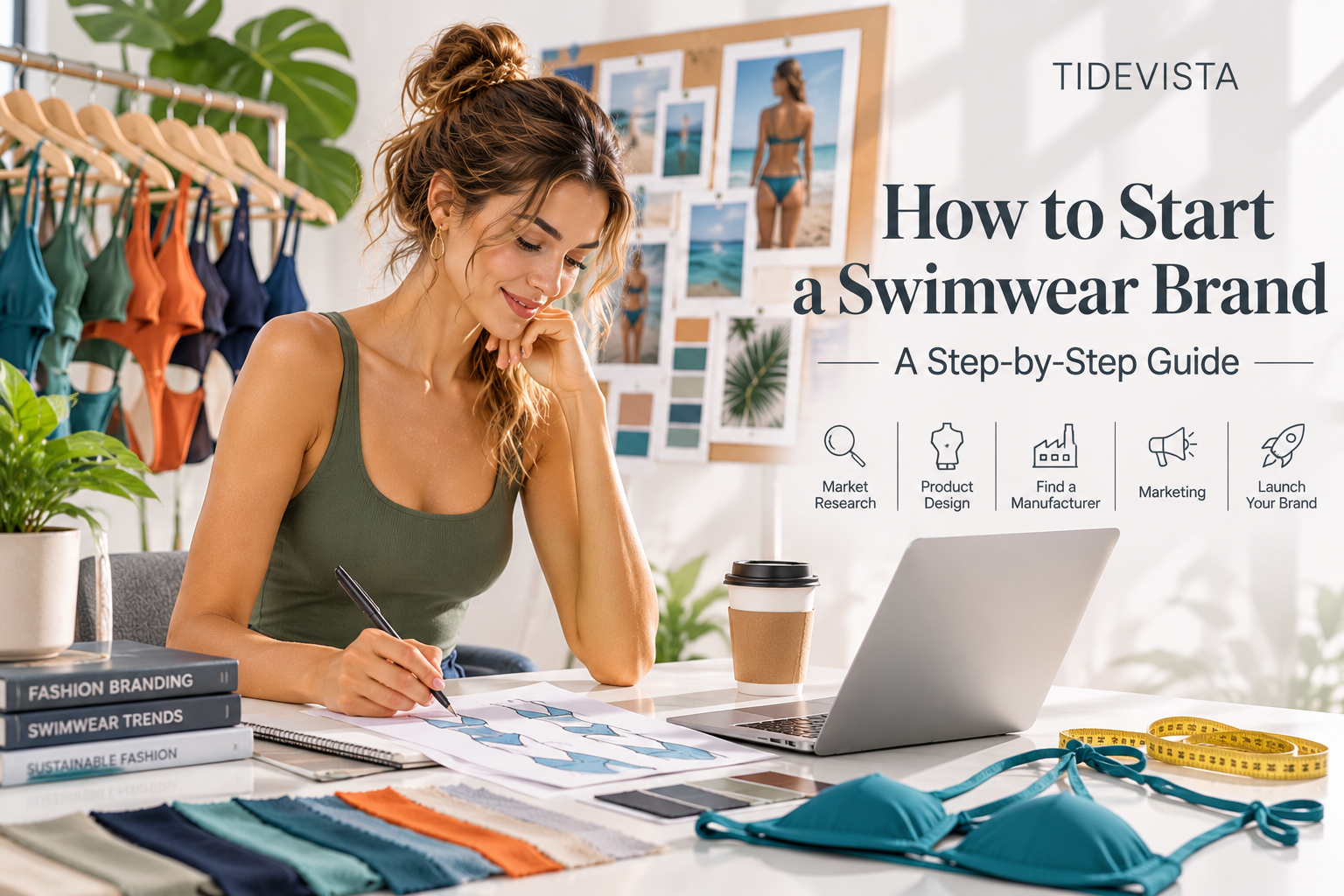
How to Start a Swimwear Brand: A Step-by-Step Guide
Starting a swimwear brand can be an exciting opportunity for entrepreneurs, fashion retailers, and online business owners. From bikinis and one-piece swimsuits to resort wear and inclusive swimwear collections, there are many ways to build a brand that serves a specific customer group.
However, launching a successful swimwear business requires more than choosing attractive designs. You need to understand your target market, select suitable products, find a reliable manufacturer, develop samples, plan your budget, and create a strategy for reaching customers.
This guide explains how to start a swimwear brand step by step, helping you turn your initial ideas into a practical product and sourcing plan.
1. Define Your Swimwear Brand Positioning
Before contacting manufacturers, decide what kind of swimwear brand you want to build.
A clear positioning helps you choose products, establish pricing, communicate your brand identity, and identify the customers most likely to buy from you.
Choose Your Target Customers
Consider who you want to serve. Your potential customers might include:
Women looking for minimalist or fashionable bikinis
Customers interested in sporty and functional swimwear
Plus-size shoppers seeking comfortable, well-fitting swimsuits
Resort and vacation wear customers
Families shopping for coordinated swimwear
Consumers looking for premium or sustainable-material options
You do not need to serve every customer group at launch. Starting with a specific audience can make product development and marketing more manageable.
Identify Your Brand Style
Decide how your products should look and feel.
For example, your brand might focus on clean minimalist designs, vibrant tropical prints, elegant resort styles, sporty silhouettes, or versatile swimwear for everyday beach activities.
Create a mood board containing reference images, colors, silhouettes, fabric textures, and branding ideas. Use it to communicate your direction to your manufacturer.
Research Your Competitors
Review brands that target a similar audience. Study their product range, size options, retail prices, photography, product descriptions, and customer reviews.
Look for recurring customer complaints or underserved needs, such as limited sizing, uncomfortable straps, inconsistent fit, or a lack of versatile designs.
The objective is not to copy another brand. It is to understand the market and identify a clear reason customers might choose your products.
2. Choose the Right Swimwear Products
Your first collection should be focused enough to manage, but varied enough to communicate your brand's identity.
Start with a Core Collection
Depending on your target audience, you might consider:
High-waisted bikini sets
Bandeau or halter bikinis
One-piece swimsuits
Tankinis
Cover-ups or selected resort wear
Choose products based on your customer research rather than simply adding as many styles as possible.
A small, coordinated collection can help you test demand and learn which silhouettes, colors, and sizes perform best.
Consider Colors and Prints
Choose colors and prints that work together as a collection.
A useful approach is to combine a few core colors with selected seasonal shades or distinctive prints. Too many variations can increase inventory complexity, especially when each style and color must be stocked in multiple sizes.
Ask your manufacturer which colors and prints are available and whether custom fabric printing involves additional minimum quantities.
Plan Your Size Range
Size planning is particularly important for swimwear because fit affects comfort, support, and customer confidence.
Research the sizing expectations of your target market. Decide whether you will use US, UK, EU, or another size system, and make sure your size chart clearly explains measurements.
Request samples and review the fit before confirming your production specifications.
3. Choose a Swimwear Manufacturing Model
Once you have a product direction, decide how you want your products to be developed.
There are three common approaches to consider.
Private Label Swimwear
Private label swimwear allows you to sell products under your own brand name. Depending on the supplier, you may select existing styles and add custom labels, hangtags, packaging, or other available branding options.
This can be a practical starting point for businesses that want to establish a brand without developing every product from scratch.
OEM Swimwear Manufacturing
OEM manufacturing generally involves producing swimwear according to the buyer's designs or specifications.
It may be suitable if you have original designs, detailed measurements, specific material requirements, or a distinctive product concept.
ODM Swimwear Manufacturing
ODM manufacturing generally involves selecting or customizing designs offered or developed by the manufacturer.
It may be useful when you want to start with existing product styles and reduce some of the initial design-development work.
The available services vary by supplier. Before making a decision, confirm customization options, design-use permissions, minimum order quantities, and sampling requirements.
4. Find a Reliable Swimwear Manufacturer
Choosing the right manufacturer is one of the most important steps when starting a swimwear brand.
A suitable supplier should be able to understand your product requirements, communicate clearly, provide relevant samples, and explain its production and quality-control processes.
Where to Find Manufacturers
Potential sourcing channels include B2B marketplaces, industry trade shows, professional referrals, manufacturer websites, and direct supplier inquiries.
When comparing suppliers, look beyond the initial unit price. Consider their experience with your product category, communication, available materials, customization capabilities, and willingness to clarify specifications.
Questions to Ask a Manufacturer
Before placing an order, ask:
What swimwear styles can you produce?
Do you offer OEM, ODM, or private label services?
What is your MOQ per style, color, or order?
Can you provide fabric specifications and available color options?
What are the sample fees and sample lead times?
How long does bulk production usually take?
Can you provide custom labels, hangtags, and packaging?
What quality inspections are available?
What are the payment terms and shipping options?
Ask for written answers so that you can compare suppliers on the same basis.
Evaluate Samples Before Ordering
A supplier's product photographs are not a substitute for physical samples.
Inspect fabric feel, stitching, lining, closures, color, measurements, and overall construction. For swimwear, also evaluate coverage, stretch recovery, fit, and comfort.
If you plan to sell multiple sizes, review the grading and fit requirements for your intended size range.
Approve a final sample and document the specifications before bulk production begins.
5. Understand MOQ and Production Costs
Minimum order quantity, commonly called MOQ, is an important consideration for new swimwear businesses.
The MOQ may vary according to product complexity, fabric availability, custom printing, color selection, branding requirements, and the manufacturer's production arrangements.
What Can Affect MOQ?
For example, a supplier may have different requirements for an existing bikini style and a completely customized design. Custom fabric colors or prints may also involve minimum purchasing quantities.
Always clarify whether the MOQ applies per style, per color, per size, or across the complete order.
Build a Realistic Startup Budget
Your budget should cover more than manufacturing costs.
Potential expenses include:
Product development and samples
Fabric and garment production
Custom labels and packaging
Product photography and content creation
Website development and maintenance
Shipping, duties, and applicable taxes
Marketing and customer acquisition
Inventory storage and fulfillment
Returns, exchanges, and customer service
The total amount depends on your business model, order size, destination market, and sales channels.
Before committing to inventory, prepare a cash-flow plan that includes upfront payments, expected production time, shipping time, and the period before sales revenue arrives.
Calculate Your Landed Cost
Your landed cost is the total cost of getting a product to the location where it will be sold or fulfilled, based on the expenses included in your calculation.
Depending on your arrangements, it may include the product cost, packaging, freight, insurance, customs duties, and other applicable charges.
Use the landed cost rather than the factory price alone when evaluating your retail pricing and potential margins.
6. Develop and Approve Your First Swimwear Samples
Sampling helps you evaluate whether the product matches your expectations before you invest in bulk production.
Prepare Your Design Information
For custom products, provide reference images, sketches, measurements, fabric preferences, color references, logo artwork, and construction details where available.
For existing designs, identify the selected style and confirm which changes are permitted.
The more clearly you communicate your requirements, the easier it is to reduce misunderstandings during development.
Review the Sample Carefully
Check the following areas:
Fabric composition and hand feel
Color accuracy
Stitching and seam construction
Lining and coverage
Strap placement and adjustability
Elasticity and recovery
Size and fit
Logo placement and finishing
Try the garment under appropriate conditions and compare it against your approved specifications.
Confirm Revisions and Final Approval
If changes are needed, record them clearly and request a revised sample when appropriate.
Once the sample is approved, confirm the final measurements, materials, colors, labels, and packaging requirements in writing.
Avoid making unrecorded changes after approval because they can create inconsistencies between the sample and bulk production.
7. Build Your Brand Identity and Packaging
Your brand identity should be consistent across your products, website, packaging, and marketing materials.
Create a Clear Brand Name and Visual Style
Choose a brand name that fits your target market and check its availability before investing heavily in branding.
Develop a consistent visual system that includes your logo, colors, typography, product photography style, and brand messaging.
For swimwear, your presentation might communicate elegance, confidence, sportiness, comfort, or a relaxed vacation lifestyle.
Customize Your Packaging
Depending on your supplier's capabilities, you may be able to customize:
Main labels and care labels
Hangtags
Product bags
Branded packaging
Size stickers and product identification
Retail packaging inserts
Confirm which options are available and whether any component has a separate MOQ.
Also check the labeling, fiber-content, care-instruction, and other product information requirements applicable to your target markets.
8. Choose Your Sales Channels
Before production, decide where you intend to sell your swimwear.
Your sales channel influences product photography, packaging, pricing, inventory planning, and customer service.
Your Own Ecommerce Website
An independent website gives you control over product presentation, brand messaging, customer experience, and content.
Useful pages include a homepage, product categories, individual product pages, size guides, shipping information, returns policies, an About page, and contact details.
Create original product descriptions and useful content that answers shoppers' questions. Make sure your site works well on mobile devices and provides a clear checkout experience.
Online Marketplaces
Marketplaces may provide access to existing customer traffic, but competition, platform fees, advertising costs, and selling policies can affect profitability.
Research the requirements of each platform before choosing where to list your products.
Social Media
Social platforms can help introduce your collection through product styling, fabric details, fit information, behind-the-scenes content, and customer feedback.
Use content that fits your target audience and directs interested shoppers to a clear product or inquiry page.
For a new brand, it is often more manageable to focus on a small number of relevant channels than to try to operate everywhere at once.
9. Create a Marketing Plan Before Launch
A launch plan should begin before your inventory arrives.
Prepare Product Content
Develop clear product photography, size guides, fabric descriptions, fit information, and care instructions.
Show the product from multiple angles and communicate important details such as adjustable straps, lining, closures, and available colors.
Accurate product information can help customers choose suitable sizes and understand what they are purchasing.
Plan Your Website SEO
Create distinct product pages for important product types and optimize each page around its actual search intent.
For example, a bikini product page should explain its style, fabric, fit, available sizes, and customization options where relevant.
You can also publish useful articles about swimwear materials, manufacturing, MOQ, sizing, and private label development.
Link related articles to relevant product pages and inquiry pages when the connection is useful to readers.
Build a Content Calendar
Plan content around product launches, seasonal demand, styling ideas, fabric education, and frequently asked questions.
For B2B brands or manufacturers, useful content can also explain sampling, customization, production planning, and private label services.
Avoid relying entirely on promotional posts. Practical information helps potential customers understand your products and builds confidence in your business.
10. Plan Your First Production Order
Once the sample, budget, and product specifications are approved, prepare for bulk production.
Before confirming the order, document:
Product styles and quantities
Size and color breakdowns
Approved fabric and trims
Final measurements and tolerances
Branding and packaging details
Quality-control requirements
Production schedule
Payment terms
Shipping method and delivery arrangements
Ask the manufacturer to confirm the production timeline and how progress will be communicated.
Arrange suitable quality inspections before shipment and ensure that the finished goods match the approved specifications.
Do not assume that an approved sample guarantees every bulk item will be identical. A defined inspection process helps identify problems before goods are shipped.
11. Common Mistakes to Avoid When Starting a Swimwear Brand
Ordering Too Many Styles at Once
A large first collection can increase inventory costs and make demand harder to predict. Consider launching with a focused selection and expanding after reviewing customer response.
Choosing a Supplier Only by Price
Low prices do not automatically mean good value. Compare quality, communication, sampling, customization, delivery, and the full landed cost.
Skipping Fit and Coverage Checks
Swimwear requires careful attention to sizing, lining, stretch, and coverage. Test samples and document fit expectations before bulk production.
Ignoring Inventory and Cash Flow
Money tied up in slow-moving inventory can limit your ability to reorder popular products or invest in marketing. Plan your purchasing quantities and cash requirements conservatively.
Launching Without a Marketing Plan
Even attractive products need a way to reach their intended customers. Prepare your product content, website, sales channels, and launch communications before inventory is ready.
Making Unsupported Product Claims
Avoid claims about sustainability, UV protection, performance, or special fabric properties unless you have appropriate supporting information.
Accurate product descriptions help establish trust and reduce misunderstandings with customers.
12. How TIDEVISTA Can Support Your Swimwear Project
TIDEVISTA focuses on swimwear and activewear for businesses developing their own collections.
Whether you are exploring existing bikini styles, planning a private label range, or preparing custom swimwear designs, begin by identifying your target customers and product requirements.
When contacting TIDEVISTA, share the following information:
Your preferred swimwear styles
Reference images or design specifications
Target colors and size range
Estimated order quantity
Branding and packaging requirements
Target market and expected delivery schedule
These details help establish which product options and manufacturing arrangements may suit your project.
Contact TIDEVISTA to discuss your swimwear collection, product customization, sampling, and sourcing requirements.
Frequently Asked Questions
How much money do I need to start a swimwear brand?
There is no universal startup budget. Costs depend on product development, MOQ, materials, branding, shipping, website expenses, marketing, and inventory. Prepare a detailed budget based on actual supplier quotations before placing an order.
Can I start a swimwear brand with no design experience?
Yes, you can explore existing product designs and available customization options through suitable manufacturers. You will still need to evaluate samples, define your brand positioning, and confirm product specifications.
What is the best way to find a swimwear manufacturer?
Research suppliers through B2B marketplaces, industry events, referrals, and manufacturer websites. Compare samples, communication, MOQ, customization capabilities, quality control, and written terms before selecting a partner.
What is the difference between private label and custom swimwear?
Private label generally means selling products under your own brand name. Custom swimwear refers to products developed or modified according to specific requirements. A private label collection may use existing styles or custom-developed designs.
How many swimwear styles should I launch with?
The right number depends on your budget, customer research, and inventory strategy. A focused collection can make it easier to manage sizes, colors, and purchasing requirements while you learn which products customers prefer.
How long does it take to launch a swimwear brand?
The timeline depends on design development, sample revisions, material availability, production capacity, shipping, and website preparation. Ask suppliers for separate estimates for sampling, bulk production, and delivery, and allow time for revisions.
Should I order samples before bulk production?
Yes. Sampling allows you to assess fabric, fit, construction, sizing, and branding before committing to a larger order. Approve the final sample and record the specifications before production.
Can I sell swimwear under my own brand name?
Many suppliers offer private label options, but available services vary. Confirm logo application, labeling, packaging, design-use permissions, and any additional minimum quantities before ordering.
Final Thoughts
Starting a swimwear brand involves a series of connected decisions, from choosing your target market and product range to selecting a manufacturer, approving samples, planning your budget, and building your sales channels.
A focused collection, clear product specifications, realistic financial planning, and reliable manufacturing arrangements can help you manage the early stages of your business.
Start with a clear customer need, validate your product choices, and expand your collection based on what you learn from the market.
Ready to develop your own swimwear collection? Contact TIDEVISTA to discuss product options, private label requirements, and your next steps.